In the July that NAND export prices fell, Korea's computer exports rose 404%
Interestingly, Korea's NAND export unit prices declined in July, while SSD export unit prices rose.
This suggests that high-margin products continue to account for a growing share of the NAND flash revenue mix.
Korea's NAND export unit price fell in July, while exports in the computer category that contains SSDs rose 404% from a year earlier in the same month. NAND did not get cheaper. Expensive NAND stopped leaving the country under the name NAND.
 Korea's July exports reach $98.9 billion on chip strength (Seoul Economic Daily English, 2026-08-01)
Seoul Economic Daily reports July exports at $98.9 billion, up 62.8% from a year earlier and the second-highest monthly figure on record. Semiconductors alone came to $41 billion, up 179%, the second straight month above $40 billion.

Why the same product lands in two different columns
Korea's trade statistics put NAND chips and SSDs in separate columns. The chip itself counts as a semiconductor, and an SSD, which is a stack of those chips with a controller attached, counts as a computer product. So when a maker assembles chips into SSDs instead of selling the chips raw, that revenue leaves the semiconductor column and moves into the computer column. What stays behind in the semiconductor column is the relatively cheaper volume, and the average unit price inside that column falls.
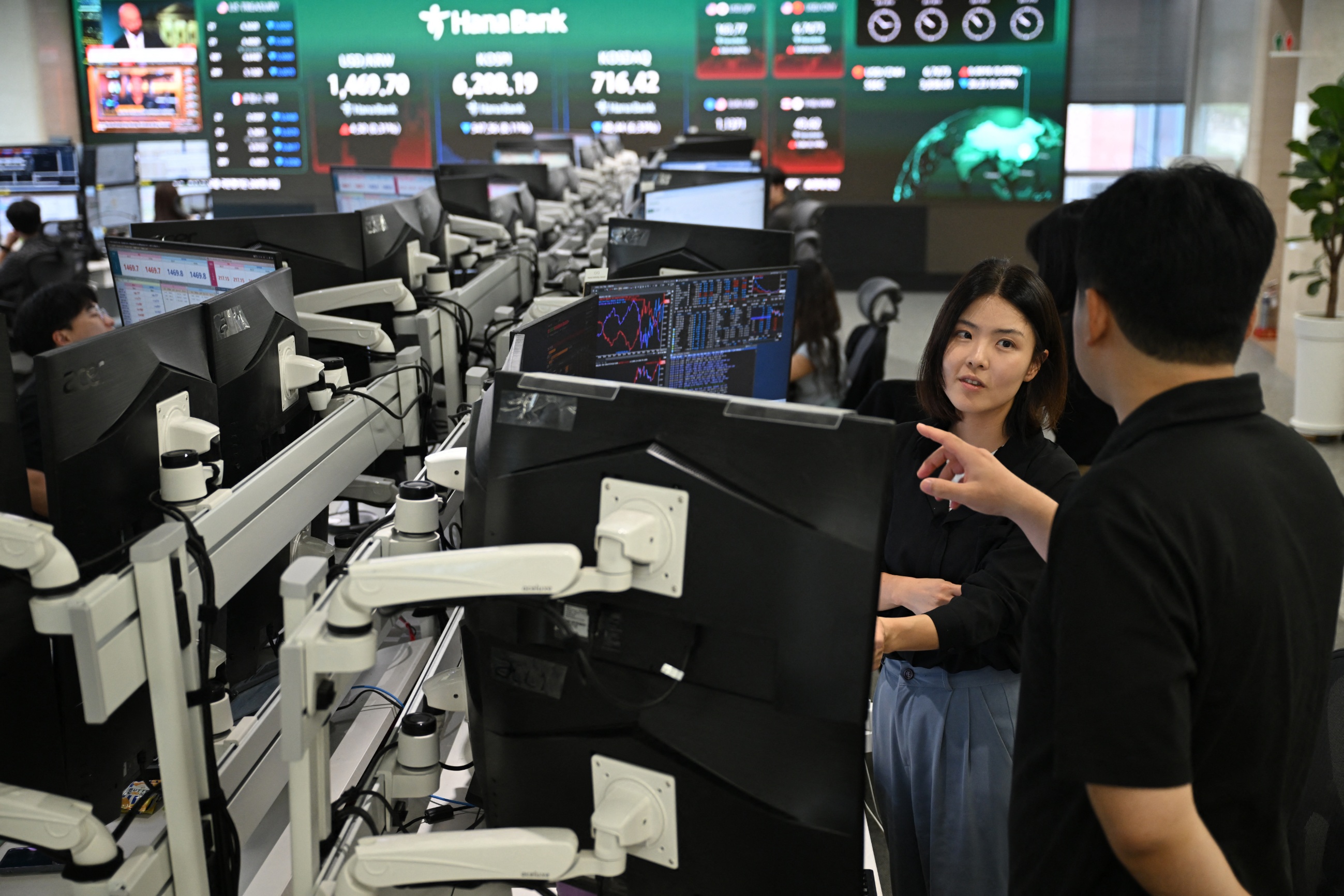 South Korea chip exports top $40B for a second straight month (TechTimes, 2026-08-01)
TechTimes notes that computer-category exports rose 404% in July, driven by enterprise SSDs for AI servers. In the month NAND unit prices fell, the column that holds SSDs grew more than fourfold.
While semiconductors grew 179%, the computer column that carries SSDs grew 404%, more than twice as fast. The value created in NAND is moving toward the finished product rather than the chip, which points the same way as the author's claim about a rising share of high-margin product.
Retrieved 2026-08-03 · Korea Ministry of Trade, Industry and Energy July 2026 trade figures, as reported by Seoul Economic Daily and TechTimes
What goes wrong when a falling unit price is read straight
An export unit price is an average divided by weight or count, so it moves with whatever is left in the column. Even with no actual price cut, a rising share of cheap goods pulls the average down. NAND is on the other side of that right now. Enterprise SSDs for data centers go into a single server dozens at a time, and Samsung expects server SSDs to account for more than 60% of its NAND revenue. That is more than 20 percentage points higher than a year ago.
So what settles it
The question comes down to one thing. Whether July's drop in NAND unit prices is the start of a price turn, or the trace of value moving to another column. The direction of the two columns settles it. If the NAND unit price in the semiconductor column and the SSD unit price in the computer column fall together, prices have started to turn, and if only one falls as now, the value moved. Trade statistics come out monthly from the government, which puts them nearly two months ahead of company results. The cost is that the same number reads backwards if you do not know how the columns are drawn. July's NAND unit price is standing exactly where those two readings part.
- Korea's NAND export unit price fell in July while its SSD export unit price rose in the same month.
- On the surface it reads as NAND prices beginning to turn.
- But Korea's statistics put NAND chips in the semiconductor column and SSDs in the computer column, and that computer column grew 404% in July.
What happened next
Awaiting gradingScore on Korea's August and September 2026 trade figures. If the computer category keeps growing faster than semiconductors while only the NAND unit price falls, it was a mix shift, and if unit prices in both columns fall together, prices turned.
This author's record
- BullNomura's three-year profit forecast for Samsung, 1,800 trillion won, tops its m…
- BullWhy does Samsung collect the full price increase on a five-year contract when M…
- BullWhy is Samsung, coming off a record quarter, locking 60 to 70 percent of its me…