Why does Samsung collect the full price increase on a five-year contract when Micron cannot?
BofA's Simon Woo: Samsung's LTAs are structured on supplier-friendly terms, with price declines capped while price increases remain broadly uncapped.
For example, QoQ price declines are limited to less than 5%, whereas increases of 10-20% or more are allowed.
The long-term memory supply agreements Samsung has signed are blocked in one direction only. Quarterly price declines are limited to under 5%, while increases of 10% to 20% or more are allowed.
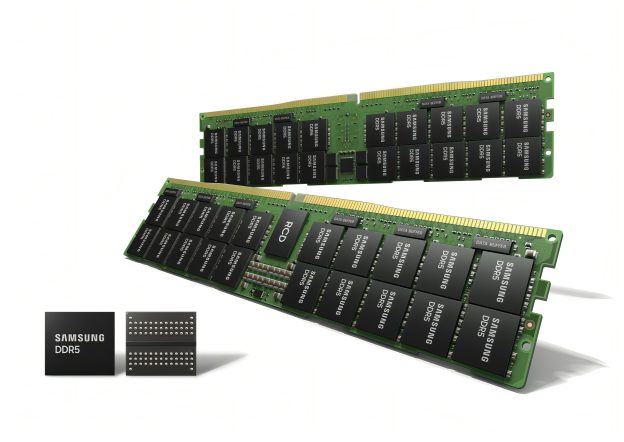 Samsung targets 60-70% of capacity under LTAs, with AWS, Microsoft and Google reportedly among the five key customers (TrendForce, 2026-07-30)
TrendForce reports the volume locked under these terms runs to 60% to 70% of Samsung's memory capacity. That matches the figure the company gave on its Q2 earnings call. Two thirds of capacity sits behind a floor, and the upside on that volume stays open.

What a long-term agreement is normally there to block
A long-term agreement is a supplier and a customer promising volumes and a price range years ahead. Usually both sides give something up. If prices fall the supplier does not take less than a set line, and if prices rise the customer does not pay above one. A floor and a ceiling together. That is where Samsung's terms stand out. There is a floor and effectively no ceiling.
What terms Micron locked in
One more company signed the same kind of contract in volume over the same period.
 Micron Q3 2026 earnings: $100B in contracts signals AI memory cycle break (TechTimes, 2026-06-25)
Micron put a ceiling alongside the floor across 16 five-year agreements. The ceiling is set near Q2 2026 market rates, and roughly 40% of revenue goes out at fixed or ceiling prices. If prices climb from here, that 40% stays pinned to Q2 levels. Same instrument, opposite direction from Samsung's terms.
Retrieved 2026-08-03 · as reported from Micron's fiscal Q3 2026 results
Micron's agreements cover about 20% of its DRAM volume and a third of its NAND volume. The floor was set to guarantee gross margins above anything the company reached in a prior cycle. It bought a structure where profit survives a collapse, and gave up part of the upside to get it.
Fix prices years ahead and you collect that price even when a boom arrives. You trade away the peak to remove the cycle.
If only the downside is capped at under 5% a quarter and the upside is open, what gets shaved is the trough, not the peak.
Same name on the contract, different place to draw the line. The skeptics are aiming at the ceiling. What Samsung drew is the floor.
Why a customer accepts terms like this
Because what is urgent on the buying side is volume, not price. It takes more than three and a half years from breaking ground to wafers coming out, and the company expects 2027 to be tighter than this year. For anyone building data centers, paying a few percent more is far cheaper than not getting the parts. The contract buys a place in line rather than a price.
So what settles it
The question comes down to one thing. Whether this asymmetry is something Samsung won at the table, or something today's shortage produced. The next round of contracts settles it. If a 5% floor on declines survives in deals signed or renewed after supply loosens, it came from bargaining power, and if a ceiling appears alongside it then, these terms were made by scarcity. In memory, news that prices are rising has always doubled as a warning of a glut a few years out. This time the value of the contract is set by how much less profit falls during that downturn. The 5% cap on declines is that answer written down in advance, and whether it holds is only confirmed after prices turn.
- Samsung's long-term memory agreements cap quarterly price declines at under 5% while allowing increases of 10% to 20% or more.
- On the surface, a long-term agreement reads as a device that locks in years of pricing and shaves the profit of a boom.
- But the contracts Micron signed over the same period carry a ceiling set near Q2 2026 market rates, and about 40% of its revenue is pinned to that ceiling.
What happened next
Awaiting gradingScore in the first quarter that memory spot prices turn down on a quarterly basis. If Samsung's memory ASP falls markedly less than spot, the 5% cap on declines worked, and if it falls in line with spot, it did not.
This author's record
- BullNomura's three-year profit forecast for Samsung, 1,800 trillion won, tops its m…
- BullIn the July that NAND export prices fell, Korea's computer exports rose 404%
- BullWhy is Samsung, coming off a record quarter, locking 60 to 70 percent of its me…