The Bank of Korea bought gold after thirteen years, without spending a single dollar
On August 3, 2026, the Bank of Korea began buying gold again for the first time in thirteen years.
Because it is buying gold produced at home, it pays in won rather than dollars, and it stores the metal in Korea rather than in Britain.
The Bank of Korea started buying gold again on August 3, 2026. It had not added a single gram since February 2013.
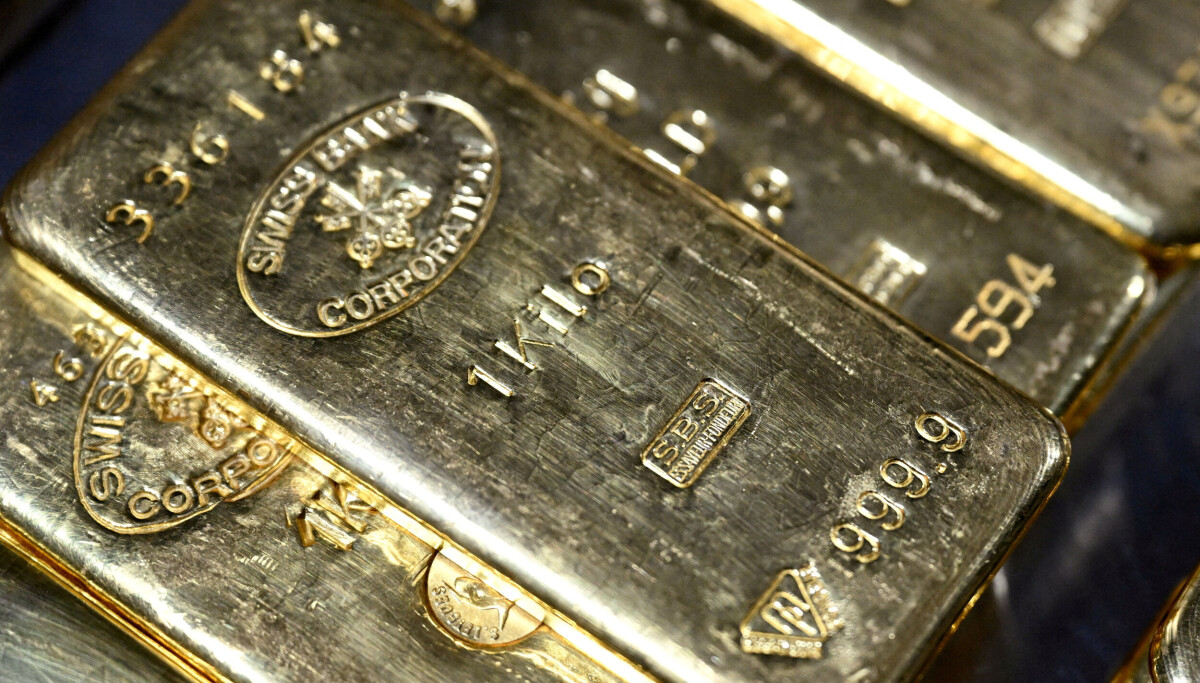 Bank of Korea resumes buying gold after a 13-year pause (Korea JoongAng Daily, 2026-08-03)
The report adds that the bank has also started buying overseas-listed physical gold ETFs. Bullion and listed products are going into the same basket now.

What stopped the buying was not the market
The bank began in July 2011, taking 25 tonnes at $1,544 an ounce, and filled out 90 tonnes over five purchases through February 2013. Gold then peaked in September 2011 and slid. At the 2013 parliamentary audit the bank was scolded for having bought the top, and the same charge came back at hearing after hearing for years. Most of the staff involved were reportedly reassigned to regional offices. Then thirteen years passed.
- 2011-07
First purchase, 25 tonnes at $1,544 an ounce
- 2013-02
Fifth purchase, and the total stops at 90 tonnes
- 2013-10
Parliamentary audit accuses the bank of buying the top
- 2026-08-03
Buying resumes after 13 years, domestic gold paid for in won
- 2027-02
World Gold Council publishes full-year 2026 central bank net buying
What this sequence shows is that the pause was triggered in a hearing room rather than in the market.
Dates and volumes per Korea Times, 2026-01-27, and Korea JoongAng Daily, 2026-08-03
The tonnage the bank was scolded for is now worth more than two and a half times what it paid, which is why a few years of return is a poor scorecard for a central bank's gold.
Average cost per Korean press reporting; the underlying calculation is not confirmed in any disclosure. Price from TradingEconomics, retrieved 2026-08-11
A different wallet this time
Korea exports gold. Smelters such as LS MnM and Korea Zinc recover 40 to 45 tonnes a year as a by-product of processing copper and zinc. The slice that used to leave the country as exports is what the bank is now buying. Buying domestic metal in won means no dollars have to come out of the reserve pool. It is like paying for something made in your own house with money already in the house: nothing leaves. Storage moves home as well. Gold parked in London is not risk-free either. The Bank of England lends out part of the metal it safekeeps to global investment banks and earns a fee. The Bank of Korea has used its share of that fee to cover storage costs. If the lent metal does not come back on time when it is called, there is a hole. Whether domestically refined bars count as reserve assets is already settled. LS MnM sits on the London Bullion Market Association's Good Delivery list. The metal clears the international standard, so moving storage onshore does not disturb how it is counted.
Where 1.1 percent and 3.2 percent part ways
The original post puts gold at 1.1 percent of Korea's reserves. The Korea Times puts the same line at 3.2 percent. The gap appears to come from whether the metal is carried at what it cost or at what it is worth today. Either way the number sits far below the average for central banks. That is the reason to check the basis before reading a headline share.
What the World Gold Council counted in the first half of 2026
The original post says China raised the size of its purchases for five straight months from March 2026. Bloomberg counts a buying streak of 21 months, with 640,000 ounces added in July, the largest monthly purchase since October 2023. The two figures do not clash. One counts months in which the purchase grew, the other counts months in which buying never stopped.
Across all central banks, though, the picture points in more than one direction. World Gold Council data put 2025 net buying at 863 tonnes, while the first half of 2026 came to 345 tonnes, the weakest first half since 2022. The same body's full-year 2026 range is 700 to 900 tonnes. The 900-plus figure in the original post is the top end of that range. So Korea breaking a thirteen-year pause and global central bank buying shrinking in the first half now sit side by side. That is where the least price-sensitive slice of gold demand is decided. Net buying above 555 tonnes in the second half reaches 900 for the year and the whale story holds; anything below that leaves 2026 as a smaller year than 2025.
- A central bank that had not bought a gram of gold in thirteen years came back as a buyer on August 3.
- On the surface it reads as a late chase of an asset that has already run up.
- This time, though, the reserve pool is untouched: domestically refined metal, paid for in won and kept at home, means no dollars have to be sold.
Scheduled for gradingAwaiting grading
Sources
- Original Meru, 2026-08-11
- Report on the resumption Korea JoongAng Daily, 2026-08-03
- Holdings, ranking and share The Korea Times, 2026-01-27
- China's July purchase Bloomberg, 2026-08-07
- Central bank net buying data World Gold Council Gold Demand Trends, full-year 2025 and Q2 2026
- Gold price TradingEconomics, retrieved 2026-08-11
Retrieved 2026-08-11. The gold price is an intraday level on August 11, and central bank net buying follows the World Gold Council's Q2 2026 report.
This author's record
- BullWhy did China build a 2008 model when it already held ASML's 7nm scanner?
- BullHouthis strike two Saudi-owned tankers by name, following through on a five-day…
- BullMeru: Alphabet raises 2026 capex to $195-205B even as free cash flow turns nega…