Korea's new ISA doubles the ceiling and shuts US index funds out of it
At the moment Japan is expanding, with the new NISA offering lifetime tax exemption, fully open access to overseas investment, and an added account for children, Korea is shrinking, with domestic assets only, the carryover abolished, and a five year limit.
A scheme like this is best kept as simple as possible.
In the tax revision unveiled on August 3, the Korean government created a new account called the productive finance ISA. Tax on interest and dividends inside it disappears and the lifetime ceiling doubles from the existing ISA, but the only things it may hold are domestic assets.

An ISA is a tax favoured account that holds deposits, stocks and funds together and trims the tax on what they earn. The existing Korean ISA exempts only the first 2 million won of gains and takes 9.9 percent of the rest separately, while the new account leaves interest and dividends untaxed with no ceiling at all. Young savers get one more thing. Anyone aged 15 to 34 with total salary of 75 million won or less can deduct 10 percent of the year's contributions from income. Paying in comes back as a deduction at year end settlement. The annual contribution limit is 20 million won, and the account runs in three year contracts up to ten years in total.
Looking only at the size of the bowl
On size alone the new Korean account is the bigger one. What the picture does not say is what may go inside it.
Ministry of Economy and Finance 2026 tax revision (2026-08-03), Japan FSA NISA framework, converted at 906 won per 100 yen (checked 2026-08-05)
What it is allowed to hold
The new account is limited to domestic assets: Korean stocks, domestic equity funds, and vehicles such as the National Growth Fund. Exchange traded funds that track US indexes drop out even when they are listed in Seoul. The target of that clause is not hard to see. Korean retail investors held $161.1 billion of overseas stocks as of the end of September 2025, and the retail share of the country's outbound equity investment, less than one in ten before 2020, is now more than one in three. The idea is to turn the flow that had been filling tax favoured accounts with US index funds back toward the domestic market.
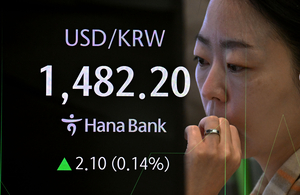 Korea offers tax breaks to curb overseas stock outflows (Korea Herald, 2025-12-24)
Holding domestic assets only also means that when one country's market shakes, there is nothing inside the account to share the shock. The saver takes the tax break and gives up the spread.
What the 9.73 million existing accounts lose
The same revision reaches back into accounts that are already open. At the end of June there were 9.73 million existing ISAs holding 73 trillion won. First, unused contribution room can no longer be carried into the next year. A saver who put in 5 million won this year could until now add the missing 15 million on top of the following year's room. The habit of catching up in a year when the bonus lands is closed off. Second, a contract that could effectively be rolled forward indefinitely is now capped at five years. The force of a tax favoured account comes from untaxed principal going straight back to work, and closing the account every five years shortens that runway.
Tax on interest and dividends is gone and the lifetime ceiling has doubled. With an income deduction for the young on top, the account got bigger.
The assets it may hold are fenced into the domestic market, and existing accounts lost carryover and duration. The bowl grew while what goes in it shrank.
What splits the two readings of the same bill is whether you look at the size of the account or at the range of assets it is allowed to hold.
Where the productive finance ISA meets the December Assembly
What exists today is a government proposal, and tax bills are normally settled in the regular National Assembly session in December. Before deciding how to use the account, the thing to watch is not the size of the benefit but whether the domestic assets only clause survives intact. If it passes as written, the practical answer is to run a tax favoured account for domestic assets next to an ordinary account for overseas indexes; if the Assembly opens the door to foreign assets, one account does the job. Anyone already holding an ISA also has reason to weigh that this year is the last one with carryover in it.
- The route that filled tax favoured accounts with US index funds is being closed.
- On the surface the benefit got larger. The range of untaxed income widened, and young savers get one more deduction on top.
- But the 9.73 million accounts already open can no longer carry unused room into the next year, and their contracts now stop at five.
Scheduled for gradingAwaiting grading
Sources
- Original Meru, 2026-08-05
- Coverage of the revision UPI, 2026-08-03
- Overseas holdings Korea Herald, 2025-12-24
- Existing ISA accounts and balances 9.73 million accounts and 73 trillion won at end June, Hankyung, 2026-08-05
- Japan NISA limits New NISA at 3.6m yen a year and 18m yen lifetime, Reuters factbox
Checked 2026-08-05. The revision is as proposed by the government on 2026-08-03 and has not been through the Assembly. The yen conversion uses 906 won per 100 yen on the same day, and the overseas holdings figure is as of end September 2025.
This author's record
- BullWhy did China build a 2008 model when it already held ASML's 7nm scanner?
- BullHouthis strike two Saudi-owned tankers by name, following through on a five-day…
- BullMeru: Alphabet raises 2026 capex to $195-205B even as free cash flow turns nega…