The US and Japan bought yen together, and what the market fears is the yen rising further
The yen carry trade is one transaction with two bets tied together.
If, instead of weakening as it has been, the yen strengthens by 5 to 7 percent in a matter of days, a whole year of earnings can vanish in an instant.
That said, no unwinding is visible yet, and the odds of it are not high.
The yen moved from 164 to the dollar to 156.9 in a matter of days. It happened after Washington and Tokyo walked into the market on the same day and bought yen.
The same piece that carries those two exchange rates also notes that the New York Fed sold euros it held, not dollars, to buy the yen. Washington intervened by selling somebody else's currency rather than touching its own. For anyone defending the exchange rate, this is the picture they wanted. For anyone who borrowed yen to buy assets abroad, it is the day the profit and loss flipped.
Why a rising yen pushes US stocks down
Borrowing yen cheaply in Japan, converting it into dollars and parking it in US Treasuries or equities is called a carry trade. Pay 1 percent to borrow and earn 4 percent where the money sits, and 3 percentage points a year accrue while you do nothing. If the yen is weaker when the loan comes due, the exchange rate hands over a second profit. The catch is that this trade is usually run on five to ten times the trader's own money. When the yen rises quickly, the sequence runs like this. The carry position takes a mark to market loss first, and when the collateral falls short a demand for more margin arrives. If fresh money is hard to find, the US stocks and bonds in the account get sold. The proceeds have to be turned back into yen to repay the loan, so the bid for yen grows again. The yen ticks up once more, another trader's stop is touched, and the same loop starts over from the top. That is why an unwind does not arrive slowly over months but lands in a few days.
The weight gap between August 2024 and now
More is riding on the trade now than when the August 2024 unwind that shook global equities began.
Retrieved 2026-08-04 · CME yen futures contracts, as counted in the original post
The day those 2024 bets began to come apart was 5 August. It was five days after the Bank of Japan raised rates, and the Nikkei fell 12.4 percent in a single session. Korea's KOSPI dropped 8.7 percent the same day. One contract is 12.5 million yen. Turned into dollars, the pile now standing comes to roughly 15 billion, and the original post adds that this is only the share visible on the exchange.
- Autumn 1998
Yen jumps 13 percent in three days after Russia's moratorium, Long-Term Capital collapses
- 5 August 2024
A strong yen sends the Nikkei down by double digits in one session
- 3 August 2026
US-Japan joint intervention, the first since March 2011
- September 2026
Bank of Japan policy meeting
In all three cases the damage came in the stretch where the yen jumped in days, not where it climbed slowly.
Retrieved 2026-08-04 · 1998 and 2024 figures from the original post, first joint intervention since 2011 from MUFG Research
The side that has not moved is Japan's insurers
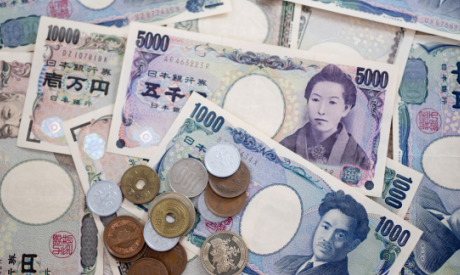 FX Daily Snapshot, 3 August 2026 (MUFG Research, 2026-08-03)
MUFG records this as the first US-Japan joint intervention since March 2011. The same note estimates Japan spent around 53 billion dollars in a day and the US somewhere between 5 and 10 billion. It also observes that the yen had come to be seen as a one-way bet. The largest pool of carry money, Japan's life insurers and pension funds, has stayed quiet. The line that brings them home is the yield on Japanese government bonds, and the original post puts the switch at 2 percent on the 30-year. The 30-year is now approaching 4 percent. The reason they have not moved long after that line was crossed, the post argues, is that they expect yields to rise further. Higher yields would mean losses on bonds bought today, so they wait until they judge the rise is spent.
The September Bank of Japan meeting is the first fork
MUFG reports that Governor Ueda signalled a rate rise is possible at the September meeting. Once the ceiling on Japanese rates comes into view, money that has been waiting can head for the same exit at once. The original post does not claim the unwind is under way. It reads closer to filing this as a low probability risk that spreads widely if it does land. What the author calls the frightening part is the stretch where funds with no carry exposure at all get told by their risk models to cut positions because volatility has risen.
- Money that borrowed yen to buy US assets starts losing the moment the exchange rate turns, and that loss converts straight into sell orders for US stocks and bonds.
- The joint intervention turned that rate around in days, and the pile of bets on a weaker yen sitting in Chicago is heavier than it was before the August 2024 slide.
- The largest pool of carry money, Japan's insurers, has not moved. What they are waiting for is the moment Japanese yields run out of room to rise.
Scheduled for gradingAwaiting grading
Sources
- Original meru (ranto28) · Why talk of a yen carry unwind follows the US-Japan joint intervention · 2026-08-05
- Wolf Street Why the US-Japan joint intervention, with the yen moving from 164 to 156.9 (2026-08-03)
- MUFG Research FX Daily Snapshot, first joint intervention since March 2011, size estimates and Ueda's September signal (2026-08-03)
- CFTC Commitments of Traders Speculative net short in yen of 123,800 contracts, report dated 2026-07-10, as compiled by FX.co
Retrieved 2026-08-04 · yen levels as reported by Wolf Street on 2026-08-03 · speculative positioning from the CFTC weekly report dated 2026-07-10 · CME contract counts as tallied in the original post at end-July 2026
This author's record
- BullWhy did China build a 2008 model when it already held ASML's 7nm scanner?
- BullHouthis strike two Saudi-owned tankers by name, following through on a five-day…
- BullMeru: Alphabet raises 2026 capex to $195-205B even as free cash flow turns nega…