Why did the stocks a liquidated fund had been holding jump 25% the very next day?
Did Citadel really just liquidate Situational Awareness… Then brought up entire markets the next day?
$NBIS +26.25% $IREN +25.96% $SHAZ +22.82% $SNDK +23.98% $BE +23.67% $SKHY +16.98% $INTC +12.16%
This has gotta be one of the wildest liquidations I've seen.
Situational Awareness, a hedge fund built around AI, handed over its entire listed equity book. The buyer was Citadel. The positions included Broadcom, Intel and CoreWeave.
 Citadel buys most of Situational's stock holdings after AI share rout (Reuters, 2026-07-30)
Reuters reports that what changed hands was the part of the public portfolio financed with money borrowed from brokers. The fund did not sell because it judged the price. The collateral behind the borrowed money ran short, and that portion went across in one piece. Then, the next day, the same names went up. The gains the original post recorded run from 12% to 26%.

Why only the borrowed part moved
When you post collateral with a broker and borrow to buy stock, a falling price leaves that collateral short. The broker then asks you to top it up, and if you cannot, the broker sells for you. That is a margin call, and the party holding the collateral is the prime broker. Situational Awareness is reported to have run about four times leverage on its listed book. Four times means one part your own money and three parts borrowed, buying four. At that ratio a 25% fall in the stock produces a loss of one, which is exactly all of your own money. In July the names the fund held fell between 35% and 47%. That is far past 25%, so on the arithmetic the equity behind the listed book was already gone.
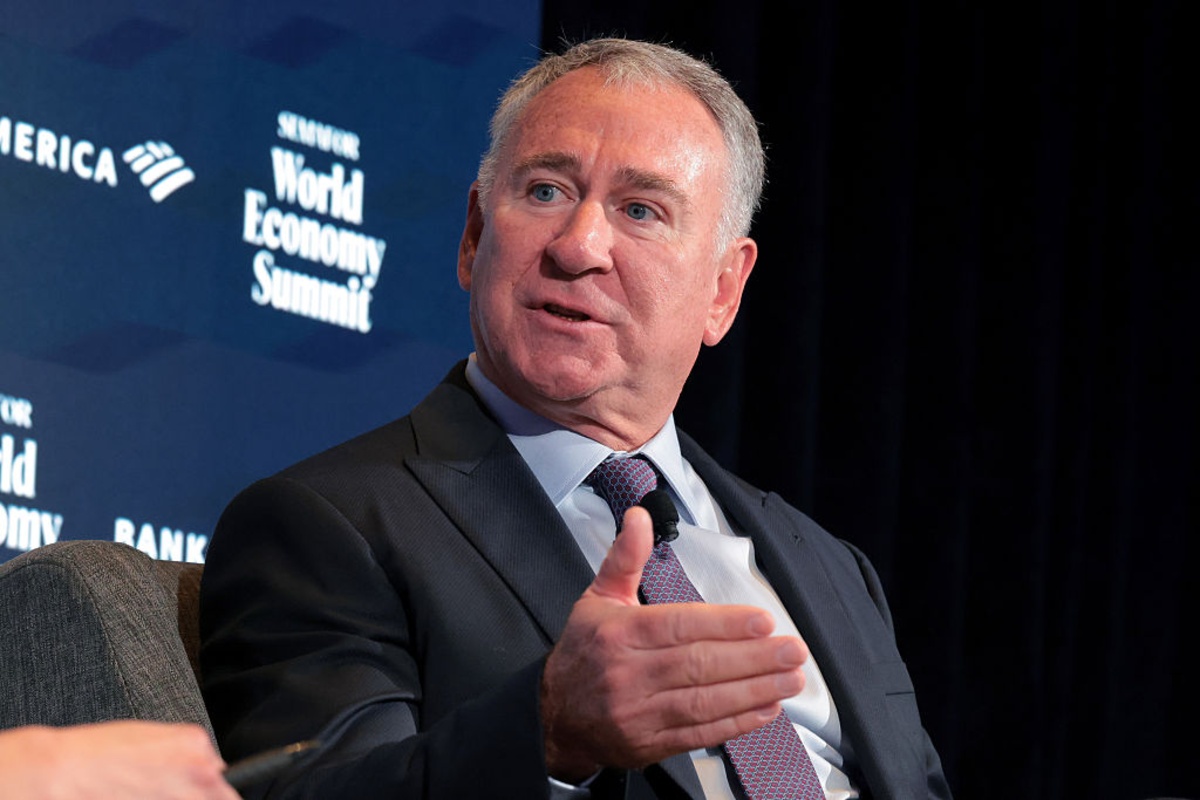 Citadel buys Situational Awareness portfolio as 4x leverage ends AI fund's 1,000% run (Tech Times, 2026-07-30)
The same report says former OpenAI researcher Leopold Aschenbrenner started the fund in late 2024 with $225 million and compounded it past 1,000% after fees. Cut the line at the end of June this year and it was up 439%. The size of the fund is reported differently in different places. Reuters puts it near $20 billion under management with roughly $10 billion left after this deal, while other reports cite $45 billion at the July peak.
What survived
One asset stayed with the fund. Its stake in Anthropic. Private shares are not sitting with a broker as collateral, so they cannot be margin called. It was not kept because anyone preferred it. Whatever was pledged went first, in order. Where leverage is involved, the person choosing what to protect is not the portfolio manager.
Why it went up the next day
The forced seller that had been pressing the market all month is gone. That says the fall was about flows rather than earnings.
That same day, June inflation fell month over month for the first time in six years, and Microsoft surged on cloud revenue.
The split is whether you read one day as flows or as news.

The Motley Fool reports that the Nasdaq posted its biggest single day gain since June, carried by the jump in Microsoft's Azure revenue. Semiconductor names rode that move as well, which makes it hard to credit the whole day's gain to the liquidation finishing.
How we will know
In the end there is one question. Was July's decline the market repricing AI, or borrowed money leaving the building. The place it splits is the next few weeks. If the same names hold their ground now that the forced seller is gone, July was made by flows. If they slide again, the repricing reading was right. Nothing was sold because conviction wavered. The moment the price fell more than 25%, the selling side was set automatically, and the party that made that decision was the lender rather than the fund. Where leverage is involved, collateral sets the timetable, not conviction.
- The listed equity book of Situational Awareness, a hedge fund built around AI, went to Citadel. Reuters reports that what changed hands was the part financed with money borrowed from brokers.
- On the surface it reads as a verdict on AI investing. Yet the very next day the same names rose between 12% and 26%.
- The fund is reported to have run about four times leverage on its public book. At four times, a 25% fall wipes out the equity, and in July those names fell 35% to 47%.
What happened next
Awaiting gradingScore at the end of August: Broadcom, Intel and CoreWeave holding above their July 30 closes counts as a flow-driven fall, while a break back below the July lows counts as a repricing.
This author's record
- BullTwo earnings reports landed on the day chip stocks crashed together, revenue up…
- BullThe 'Photonics CEO' Who Said Pluggables Have 10 Years Left Runs a Laser Supplie…
- BullTesla stock lost $140 billion in a day. Musk spent the earnings call talking ab…