US card delinquency sits near a 2011 high, and it fell from the prior quarter
12.9% of credit card balances in the US are 90+ days delinquent, near the highest since 2011.
10.6% of student loan balances are now 90+ days delinquent, the highest since 2020.
5.5% of auto loan balances are 90+ days delinquent, just off the highest level on record.
12.9% of credit card debt in the US is more than 90 days past due. That is close to the highest level since 2011.
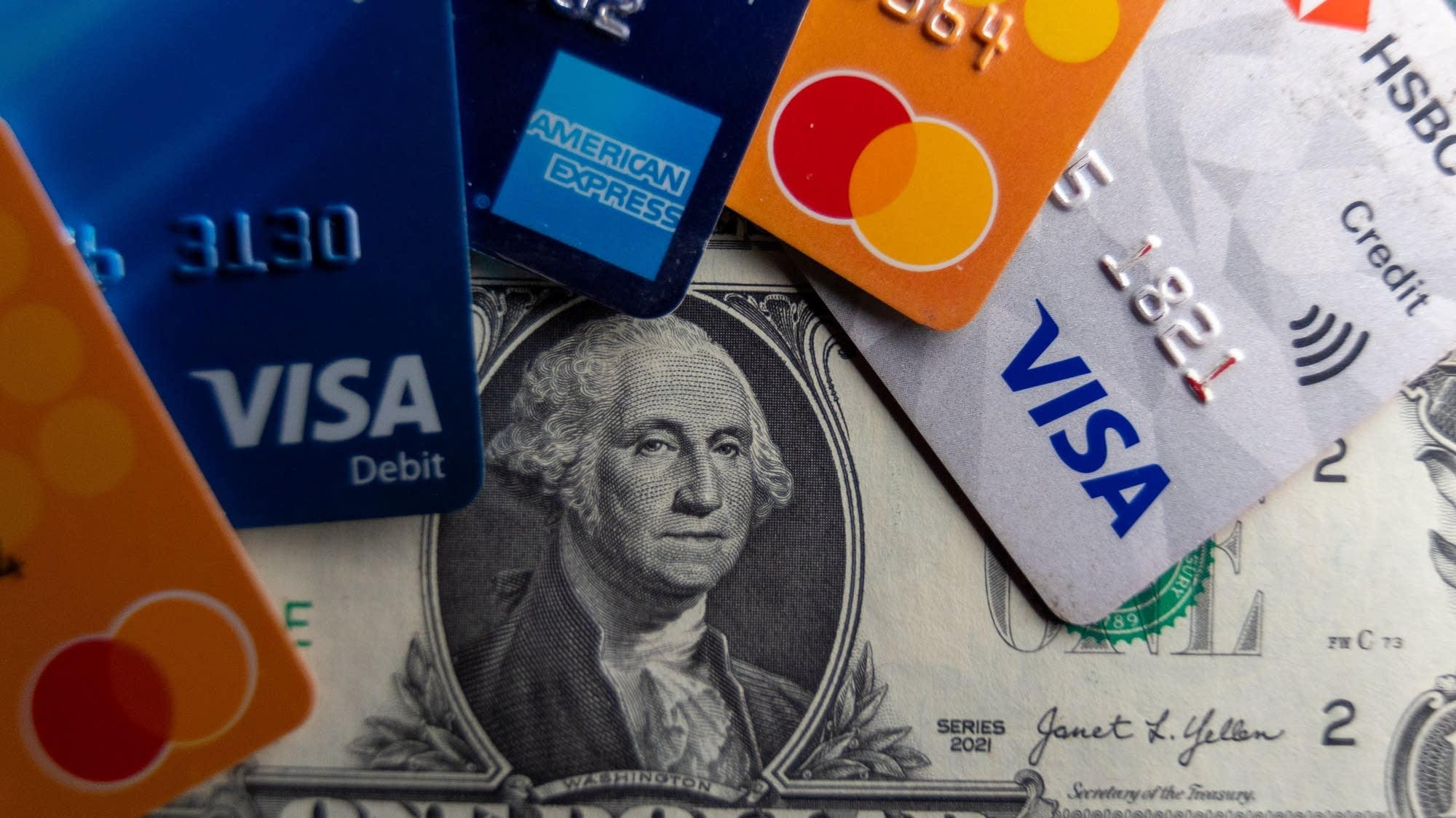 Credit card delinquencies approach Great Recession levels (Marketplace, 2026-08-11)
The figure comes from the quarterly household debt report the New York Fed released on August 11. Every three months it tallies what American households owe and how much of it has gone unpaid. The phrase "90+ days delinquent" counts money, not people. It does not tell you how many borrowers out of a hundred fell behind. It tells you how many dollars out of every hundred lent have not come back for three months. Put plainly, it counts the amount that is late, not the borrowers who are late. That distinction decides where this ends up.
Two of the three came down from the prior quarter. Three numbers standing side by side do not point the same way.
2026-08-11 · New York Fed, Household Debt and Credit Report, 2026 Q2
The same report carries other numbers. Total US household debt stands at $18.771 trillion, down $13 billion over three months, and the share of balances in any stage of delinquency slipped 0.1 percentage points to 4.7%.
Why student loans rose alone
Student loans went from 10.3% to 10.6%. What pushed that number up was not new borrowing but a rule. During the pandemic the US paused repayment on federal student loans. The pause ended in September 2023, and a further twelve-month cushion was attached to it right away. Through those twelve months a missed payment was not reported to the credit bureaus. Once that shield came off, years of unpaid balances began registering all at once. So the rise in this line looks less like conditions worsening now and more like several years of conditions being copied into the ledger late.
- September 2023
Federal student loan repayment pause ends
- October 2024
The twelve-month no-reporting cushion also ends
- 2025 Q1
Delinquencies start being reported to credit bureaus again
- 2025 Q4
About 1 million borrowers record a first default
- 2026 Q1
A further 2.6 million default
This is the order in which the record came back, not the order in which conditions got worse. That is why this line moves against the other two.
New York Fed, Liberty Street Economics, 2026-05
The bank ledger moves the other way
The household share sits high while the bank share comes down. The charge-off rate on card loans at the 100 largest US banks fell from 4.3% in the first quarter of 2025 to 3.7% in the first quarter of 2026. A charge-off is the share a bank has decided it will never collect and has erased from its books.
 Americans' debt declines, but signs of financial strain persist (The National News Desk, 2026-08-11)
That report settles on the same shape: the total fell while the marks of strain stayed. The two numbers move apart for the reason set out above, that this measure counts dollars. If the amount banks erase is shrinking while the share of late dollars stays high, it reads as late money gathering more heavily on a smaller number of households. That is the passage US coverage of this report labelled K-shaped.
What the November New York Fed report will settle
So the question is whether to read these three numbers as an economy turning down, or as several years of record-keeping catching up. On the evidence available, each is partly right. The student loan rise is plainly the work of a rule, and card and auto turned direction from a high place. Either way, the structure in which late money gathers on one side stays where it is. The next place to see the same statistic is the 2026 Q3 report due in November. If card delinquency 90+ falls below this quarter's reading, the decline was a trend; if it climbs above, the second quarter was a pause.
- 12.9% of US credit card balances are 90+ days delinquent, with student loans at 10.6% and auto loans at 5.5%.
- Set side by side, the three read as household debt giving way at once on cards, student loans and cars.
- But in the same report cards and autos came down from the prior quarter, and the one that rose alone is student loans, where a repayment pause that ended in 2023 is only now reaching the credit bureaus.
Scheduled for gradingAwaiting grading
Sources
- Original Charlie Bilello (@charliebilello) · 2026-08-12
- Primary source, Quarterly Report on Household Debt and Credit Federal Reserve Bank of New York, 2026 Q2, released 2026-08-11
- How student loan defaults resumed New York Fed, Liberty Street Economics, 2026-05
- Bank card charge-off rate FRED CORCCT100S, 100 largest banks, 3.7% in 2026 Q1
- Coverage, card delinquency Marketplace, 2026-08-11
Checked 2026-08-12. Delinquency shares and debt totals are from the New York Fed's 2026 Q2 report (as of June 30); the bank charge-off rate is the 2026 Q1 reading. The phrases about a 2011 high and a record high for auto loans are the author's; the Q2 card and auto figures are read off the report's chart rather than stated in its text, so the decimal could not be confirmed against the primary source.
This author's record
- BearUS listings have climbed to 1.12 million, and they are still 11.6% below normal
- BearAI capex expectations grew 1.7 times in half a year, but the side putting up th…
- BearBilello asks: are we in an earnings bubble?