The collateral behind the $500 billion is not the GPUs
Nvidia is not the one investing the $500 billion directly.
Once that money builds the data centers and buys the GPUs, most of the loan proceeds end up flowing to Nvidia.
The core risk in this structure is not the collateral (the Homeplus stores, the GPUs) but the credit of the user (Homeplus, OpenAI and the like) and how solid the contract is.
What keeps a $500 billion loan book safe is not the GPUs. It is the credit of the companies renting them.
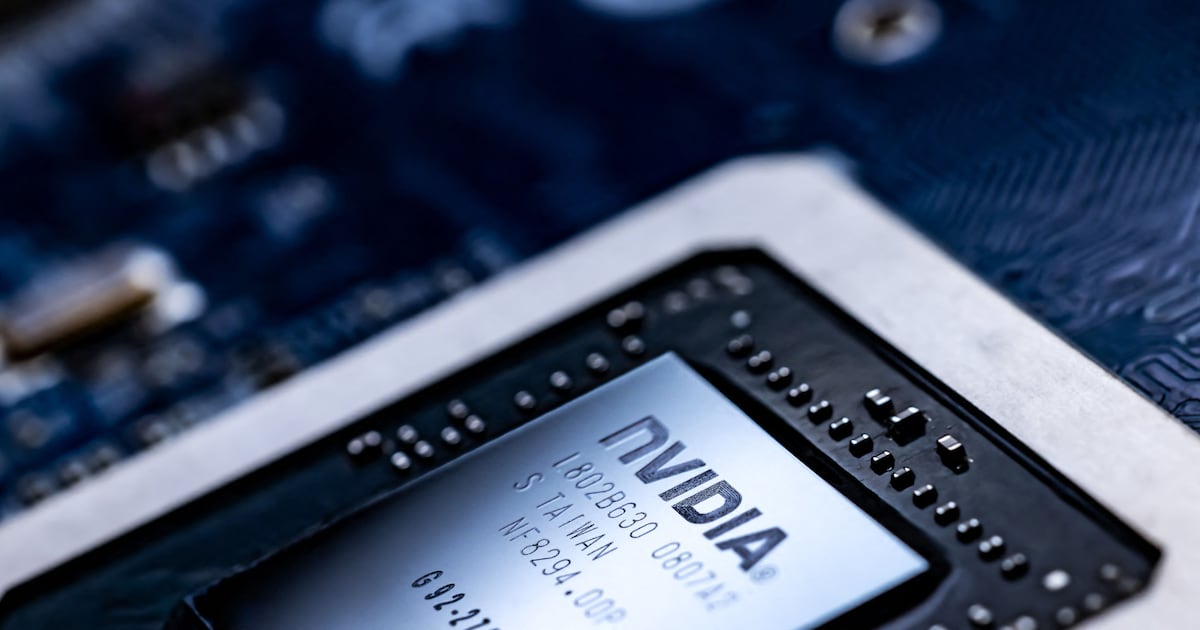 Nvidia turns to Wall Street giants to raise $500bn for AI infrastructure (The National / Bloomberg, 2026-08-11)
Bloomberg reported that the six firms designed the structure around separate entities able to issue tens of billions of dollars of bonds at a time, with Goldman Sachs running the public bond sales.
Why a supermarket chain belongs in this story
Meru reads the structure as a sale-and-leaseback. You sell a building you own, pocket the cash, and rent the same building back on a long lease. Swap the store for a data center and the tenant for an AI buyer such as OpenAI, and only the cast changes. What the lender actually holds is not the building. It is the tenant's ability to keep paying every month.

The take-or-pay contract has holes in it
The tool used to close that risk is a take-or-pay contract. It says you pay for the agreed amount whether or not you actually use it. Revenue holds up even if demand softens, so credit committees treat such a contract almost as collateral. But in both the United States and South Korea, an administrator in a court restructuring can reject contracts that have not yet been performed.
When Homeplus filed for court receivership in March 2025, its leases were terminated. The property funds and REITs that had been paying bank interest out of that rent were left holding stores that had stopped trading. The life of the contract was set by the tenant's condition, not by the term written into it. Bankruptcy is not even required for this to bite. Once a tenant's credit wobbles, renegotiation on softer terms usually arrives before any default.
The 25% that was in the announcement
Nvidia is widely described as putting up no money, yet the announcement carries a condition allowing it to backstop up to 25% of a given opportunity. Part of the risk that sat with the tenant moves back to the seller.
Nvidia newsroom announcement 2026-08-10; Morgan Stanley forecast as reported by Forbes 2026-07-17; retrieved 2026-08-12
The asset managers underwrite and lend independently. Compute is fungible across customers, which makes it sound collateral.
The presence of a backstop is itself the signal. If tenant credit alone had raised the money, the seller would have no reason to stand behind it.
One side is looking at the quality of the collateral, the other at why the guarantee was needed at all.
The rate OpenAI ends up paying

This is still a memorandum stage, so what can be observed now is the price rather than the size. Meru put it at roughly 6% for an investment-grade borrower like Google, and questioned whether OpenAI could raise money even at 15%. If the first bonds price in investment-grade territory, the structure settles in as infrastructure finance; if they price in high-yield territory, the market is still reading it as money supplied by the seller. Samsung Electronics and SK hynix, which simply hand over chips and take payment, will read the size of the next order off that same rate.
- Nvidia has agreed with Apollo, BlackRock, Blackstone, Brookfield, Goldman Sachs and KKR to set up lending platforms for AI infrastructure.
- On the surface Nvidia is merely building the venue and putting up none of the money.
- But the announcement allows it to backstop up to 25% of a given deal, which works out to $125 billion.
Scheduled for gradingAwaiting grading
Sources
- Original Meru, 2026-08-11
- Nvidia announcement Nvidia newsroom, 2026-08-10, source for the 25% backstop condition and the $500 billion target
- Structure reporting Bloomberg story as republished by The National, 2026-08-11
- Homeplus receivership filing KED Global, 2025-03-05
- AI-related bond issuance forecast Forbes report citing a Morgan Stanley forecast, 2026-07-17
Retrieved 2026-08-12. The 25% backstop cap and the funding target are as announced on 2026-08-10 and remain at memorandum stage. The $570 billion issuance figure is a Morgan Stanley forecast as reported.
This author's record
- BullWhy did China build a 2008 model when it already held ASML's 7nm scanner?
- BullHouthis strike two Saudi-owned tankers by name, following through on a five-day…
- BullMeru: Alphabet raises 2026 capex to $195-205B even as free cash flow turns nega…