The story behind China answering Europe's 14 sanctioned companies with exactly 14 of its own
We're not sure what game political leaders in Washington, London, and Brussels are playing as they navigate World War III, but nobody would confuse it with chess.
On their board, opponents not only don't matter, but how they might respond to a move seems a foreign thought.
Recent studies estimate that up to 90 percent of sanctioned goods still reaching Russia transit through China.
When the European Union put 14 Chinese companies on its Russia sanctions list, China answered the next day by placing exactly 14 European companies under export controls. What Beijing restricted are dual-use goods, things with both civilian and military applications, along with certain rare earth elements.
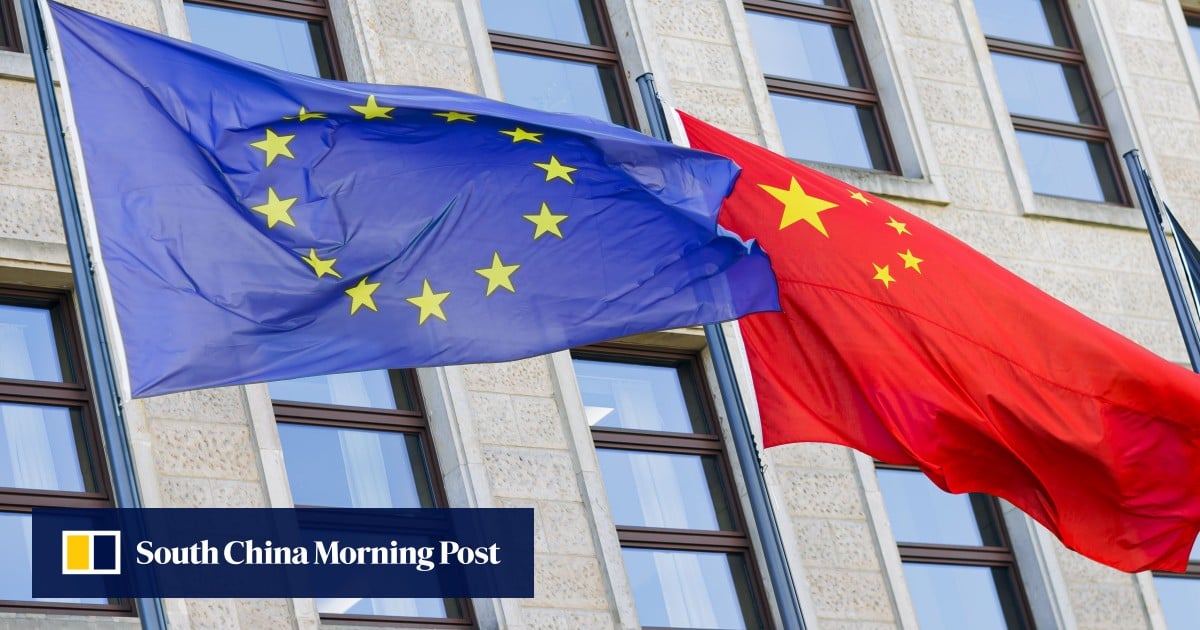
The South China Morning Post reports the list includes Germany's defence group Rheinmetall, the Italian electric motor maker Lafert and the French drone firm Cavok UAS. China's commerce ministry called the EU's action egregious and named it directly as the reason for the controls.
Why the defence industry specifically
The list makes the target obvious. Rheinmetall is the fastest growing German defence company of Europe's rearmament period. Dual-use goods are exactly what the name says, items used in civilian life and by the military alike. Specialist optics, lasers, electric motors, and the rare earths that go inside them all qualify. Put simply, what has been closed off is not weapons but the materials and parts you cannot build weapons without.

The OSW Centre for Eastern Studies reads this as Beijing's most direct and forceful response yet to an EU sanctions listing. The sanctions were meant to stop goods flowing to Russia. What came back was the supply Europe needs for its own weapons production.
Why this kind of answer is available
A bridge is needed here. Sanctions work where the other side depends on you, and the reverse holds just as firmly. Europe's grounds for sanctioning those Chinese firms was that they ship goods onward to Russia. The original piece cites studies estimating that up to 90% of sanctioned goods still reaching Russia pass through China. That is a measure of how much of the channel Beijing holds. But building weapons in Europe requires materials that come from the country holding that channel. The side you can sanction and the side that can sanction you back are the same country.
Checkers and chess
This is where the original's title metaphor lands. Chess is a game where you work out how your opponent answers before you commit to a move. Playing the move in front of you without counting the reply is closer to checkers. When the sanctions list was drawn up, was anyone counting whether the other side could answer with the identical move, and what Europe would find itself short of when it did? The reply that arrived the next day is asking whether that arithmetic was done.
So what will tell us which it was
In the end the question is one. Whether this counter-move is positioning for a negotiation, or a real constraint on European defence production schedules. The place to look is delivery dates. If Rheinmetall and other European defence firms push back delivery schedules, or announce alternative sources, it was a real constraint. If months pass with production plans unchanged, it was closer to positioning. A sanctions list is a list of what the other side depends on you for, and at the same time a list of what you depend on them for. Read only one of the two and you get an answer back the next day, as happened here.
- After the EU placed 14 Chinese companies on its 21st Russia sanctions package, China put 14 European companies under export controls the next day.
- On the surface it is an ordinary tit-for-tat, a symbolic answer that matches the number exactly.
- But what Beijing restricted are dual-use goods and certain rare earths, and at the top of the list sits the German defence group at the centre of Europe's rearmament. What was closed off is not weapons but the material for making them.
What happened next
Awaiting gradingScore by year end: an announced change to delivery schedules or a secured alternative source at Rheinmetall or other European defence firms counts as a real constraint, and unchanged production plans count as positioning.
This author's record
- BearThe scandium problem: a short seller calls Bloom Energy's China bluff
- BullGas in one side, data out the other: the off-grid project that finally pencils