On August 5, China's CXMT turned down Apple's price-cut request
CXMT instead held firm at prices equal to or higher than those quoted by Samsung Electronics and SK hynix.
An unusual situation has emerged in which CXMT is holding the price floor and thereby firmly underpinning commodity DRAM pricing as well.
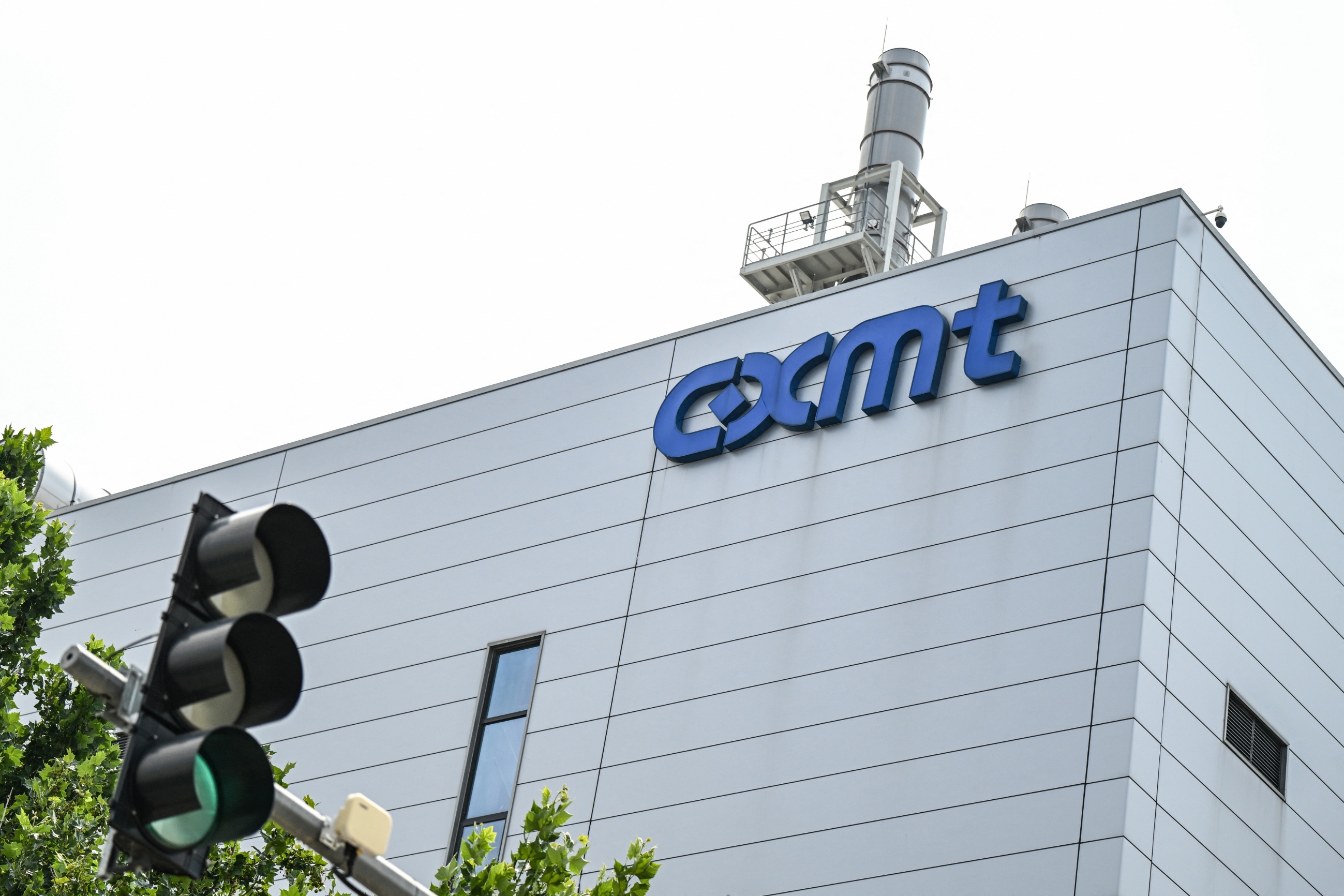
Apple asked China's CXMT for a DRAM price cut and was refused. Apple has long been the side that shakes up negotiations with its buying power, but this time it was the supplier that held the line. CXMT quoted prices at or above what Samsung Electronics and SK hynix charge. Apple had been negotiating with CXMT over mobile DRAM including LPDDR5X to ease manufacturing costs on its next iPhone and other devices, a familiar Apple playbook of dangling cheap Chinese parts to pressure incumbent suppliers. This time the playbook did not work.
Why the Chinese supplier could afford to say no
CXMT could reject Apple's demand because Chinese giants like Huawei and Xiaomi had already locked up its DRAM output through long-term contracts, driven by their own push for supply-chain self-sufficiency under US sanctions. With captive Chinese demand already absorbing its capacity, CXMT had no reason to bend to Apple's dual demand of tougher quality checks and lower prices.
 CXMT Says No Thank You to Apple's Demand For A Price Cut, as Huawei And Xiaomi Hand It Rare Leverage (WCCFTECH, 2026-08-05)
Samsung Electronics and SK hynix are the accidental winners here. With a Chinese buyer soaking up low-margin commodity DRAM, both Korean makers are freed from having to dump cheap volume and can devote more of their lines to high-value memory like HBM instead.
The real reason CXMT does not need to discount
There is a deeper reason CXMT can hold firm. Blocked from EUV lithography by US export controls, CXMT relies on older DUV tools and multi-patterning to print the same circuits, a process that requires roughly 30% more wafer starts than EUV-equipped rivals to produce the same DRAM output.
 Apple's CXMT Gambit Collapses: DUV Cost Gap Locks In Samsung's Pricing Power (Tech Times, 2026-08-05)
By process generation, CXMT is estimated to be five or six nodes behind Samsung and SK hynix. Its next-generation LPDDR6 targets 12.8 gigabits per second, short of the 14.4 Gbps SK hynix is aiming for. The equipment ceiling becomes a performance ceiling. That structure flips the story. Today's elevated price is CXMT's manufacturing floor, not its ceiling, since any real discount would make its sales unprofitable. Playing price disruptor was never an option CXMT could actually choose.
The hand Samsung and SK hynix hold for second-half talks
Apple has fewer alternative-supplier cards to play going forward. If CXMT will not budge, Apple's next negotiating partner is Samsung or SK hynix, and both now have room to push for firmer pricing in second-half long-term contracts. The open question is how long CXMT's wafer-cost burden can hold. Tighter US export controls would push CXMT's costs higher still, cementing Samsung and SK hynix's pricing power further; a breakthrough in China's domestic lithography tools could unsettle this balance again.
- CXMT's answer to Apple was, in effect, no more discounts.
- On the surface, CXMT looks like it is calling the shots.
- But that leverage exists only because US lithography export controls built it.
Sources
- Original Jukan (@jukan05) · 2026-08-05
- Cross-check 1 CXMT rejects Apple's price-cut request; Huawei/Xiaomi volume is the leverage (WCCFTECH, 2026-08-05)
- Cross-check 2 DUV cost gap locks in Samsung's pricing power (Tech Times, 2026-08-05)
Checked 2026-08-06 01:40 UTC; figures as reported in the cited articles
This author's record
- BullThe business SK hynix bought for $8.85 billion now carries a $35 billion price…
- BearThe US is moving to shut Chinese networking parts out of its data centres, and…
- BearSamsung pushed its DRAM share to 39%, and the share it took came from SK hynix,…