The Wafer Maker Says Supply Is Short. It Just Cut Its Own Forecast.
Taiwan's GlobalWafers has formally acknowledged a shortage in silicon wafers.
At its second quarter earnings conference call on the 4th, GlobalWafers said an imbalance between supply and demand in the semiconductor wafer industry is already underway.
Taiwan's GlobalWafers confirmed at its Q2 earnings call on August 4 that a silicon wafer shortage has already begun. All of its 12-inch, 8-inch, and 6-inch production lines are effectively running at maximum utilization, and supply constraints have emerged for some advanced 12-inch products.
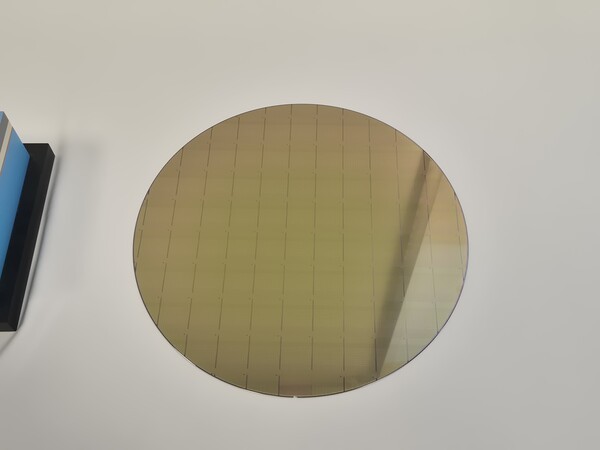 GlobalWafers Warns of Emerging 12-Inch Wafer Supply Constraints (The Elec, 2026-08-06)
Why Three Countries' Wafer Makers Are Saying the Same Thing
This shortage comes from AI chips, HBM (high-bandwidth memory), silicon photonics, and advanced packaging all pulling on capacity at once. Before any chip can be made, it needs a thin silicon disc to be etched on, the wafer itself. That base material is what's running short. Germany's Siltronic said at its July 30 earnings call that customer inventories have normalized and safety-stock rebuilding has begun. Japan's Shin-Etsu Chemical reported on July 24 that 300mm wafer shipments grew at double-digit rates both year over year and quarter over quarter. South Korea's SK Siltron is reportedly bringing new equipment online in stages, but order growth is outrunning the pace of that capacity addition. Three competing companies from three different countries saying the same thing in the same quarter is what turns this into a structural signal, not a coincidence.
Why Contract Lengths Are Stretching From 3 Years to 8
The nature of long-term supply agreements (LTAs) between wafer makers and their customers is changing. Where these contracts once existed to lock in stable volume, they now function more like customers securing capacity ahead of a shortage. Contract lengths have stretched from around three years to five to eight. Last month, GlobalWafers signed a 10-year supply agreement with memory maker Micron, the longest in the wafer industry. The deal includes prepayment-style financial support exceeding $500 million, which greenlit Phase 2 of GlobalWafers' Texas plant expansion. Shin-Etsu now supplies all of its 300mm wafers under long-term agreements, and two-thirds of Siltronic's volume follows the same model.
- 2026-07-20
Fire at Novara, Italy plant damages 8-inch back-end line
- 2026-07-24
Shin-Etsu reports double-digit growth in 300mm wafer shipments
- 2026-07-30
Siltronic reports customer inventory normalizing, safety-stock rebuild
- 2026-08-04
GlobalWafers Q2 earnings call confirms supply shortage underway
Four companies signaled the same direction within the same three weeks.
Company earnings releases and filings (Jul-Aug 2026)
The Hole the August 4 Numbers Don't Show
But there's a gap in this shortage story that the earnings numbers alone don't explain. GlobalWafers' Q2 gross margin came in at 20.7%, down 5.5 percentage points from a year earlier. That's the combined effect of legacy low-priced contracts, ramp-up costs at new facilities, and depreciation starting on the Texas plant. If supply were genuinely this tight, pricing power should already be shifting to the company. It hasn't clearly shown up in the profitability numbers yet.
 GlobalWafers Q2 Revenue Rises 8.8% QoQ to NT$15.2B, But Novara Fire Weighs on Q3 (BigGo Finance, 2026-08-04)
There's one more variable. A July 20 fire at the Novara, Italy plant damaged its 8-inch back-end processing line. Epitaxial production, the process of coating a thin layer onto the wafer surface, is expected to restart by mid-August, but the incident is expected to disrupt Q3 output. After the fire, the company lowered its full-year revenue guidance to "flat to slightly higher" than last year. So why would a company claiming shortage cut its own annual outlook? The likelier read is that a one-off fire is masking, for one quarter, the price gains the shortage should otherwise be producing. If the shortage story holds, it points to a structural shift in pricing power toward wafer suppliers like Shin-Etsu, SUMCO, Siltronic, SK Siltron, and GlobalWafers. Wafer prices sit at the very bottom of the chip cost structure, so a rise there ripples into every chip built on top of it. But this quarter's numbers are clouded by a one-time event. The line to watch is second-half spot pricing. GlobalWafers has guided that second-half spot prices will come in higher than the first half. If that guidance is confirmed with numbers at the Q3 earnings call in November, the shortage story survived the noise of the fire. If it isn't, the Novara fire will have meant nothing more than a quarter of clouded results.
- GlobalWafers officially confirmed on August 4 that a silicon wafer shortage has begun.
- On the surface, three national wafer makers are saying the same thing, and contract lengths are stretching from 3 to 8 years.
- Yet the company itself just lowered its full-year revenue forecast after a factory fire.
Scheduled for gradingAwaiting grading
Sources
- Original Jukan (@jukan05) · 2026-08-05
- The Elec Report on GlobalWafers' 12-inch wafer supply constraint warning · 2026-08-06
- BigGo Finance Summary of GlobalWafers Q2 earnings and Novara fire impact · 2026-08-04
As of 2026-08-06 · based on GlobalWafers' Q2 2026 earnings call (2026-08-04) and immediate follow-up coverage
This author's record
- BullOn August 5, China's CXMT turned down Apple's price-cut request
- BullThe business SK hynix bought for $8.85 billion now carries a $35 billion price…
- BearThe US is moving to shut Chinese networking parts out of its data centres, and…