250 kilowatts, 110 square meters of radiator, $18.4 billion of capex
BREAKING: SpaceX, $SPCX, announces a new partnership with Nvidia, $NVDA, to design its Starmind AI-1 payload, bringing data center-class compute into orbit.
The partnership will use Nvidia's Rubin GPUs and Vera CPUs, while increasing SpaceX's peak satellite computing capacity to 250 kW.
SpaceX will design the computing payload of a satellite together with Nvidia. The satellite is called Starmind AI1, and what goes inside it are Nvidia's Rubin GPUs and Vera CPUs. The number the announcement led with was not performance. It was 250 kilowatts, the peak power a single satellite may draw.
Three weeks ago the same satellite peaked at 150 kilowatts
In the specification Notebookcheck compiled on July 11, power was listed as 120 kilowatts on average and 150 kilowatts at peak. The peak went up 67 percent in three weeks.
 SpaceX lists cooling specs for the AI1 satellite (Notebookcheck, 2026-07-11)
The figure moved because the hardware got decided. The rack Nvidia sells in the Rubin generation binds 72 GPUs into a single unit. The moment that unit was chosen for orbit, the power budget of the satellite had to be sized to it. Compute is not settled first with power fitted afterwards. Only as much compute goes up as the power can carry.

In orbit the hard part is heat, not arithmetic
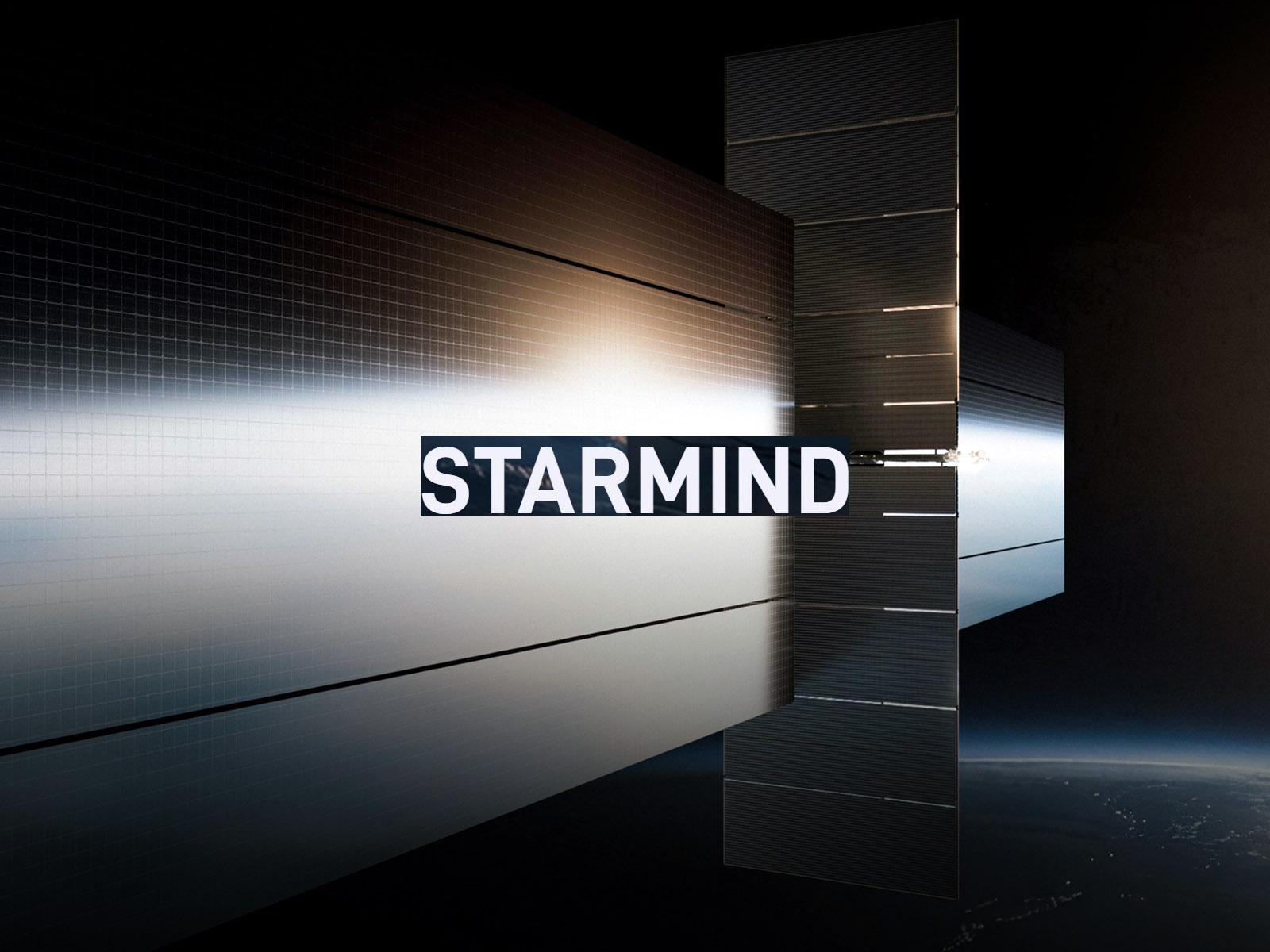
A data center on the ground moves heat into air or water and dumps it outside. A vacuum has no air to move it into, so the only way out is to radiate the heat away as light. That is why the satellite carries 110 square meters of liquid radiator to spread the heat thin. Add the solar arrays that make the electricity and the thing ends up 70 meters across and 20 meters tall. Put simply, it is running a server in a room with no air to blow, so the panel that throws heat away has to be as large as the machine itself. For all that bulk, one satellite carries roughly the compute of a single server rack on the ground. That is why the number in the company's filing to the Federal Communications Commission runs to as many as one million units.
The first earnings report, published the same day
Putting compute into orbit is still a laying-out phase, not an earning phase. Each new announcement widens this gap before it narrows it.
Yahoo Finance (2026-08-04) · SpaceX Q2 2026 results
In the first results the company has published as a listed firm, revenue beat expectations and the stock fell anyway. Capital spending in the AI segment doubled in a single quarter, from $7.7 billion to $15.8 billion.
 SpaceX's Q2 results top estimates but the stock drops on AI capex (Yahoo Finance, 2026-08-04)
What this company sells today is launch and connectivity. What it is buying is a data center in orbit. The market marks the stock down on each announcement not because the business is deteriorating but because nobody can yet see when that gap closes.
What the prototype decides in early 2027
SpaceX has the prototype satellite set for early 2027 and volume production for later that year. If the prototype reaches orbit and actually runs inference there, then power and heat, the two walls, have been cleared at least at the scale of one unit. If the launch slips or the power and cooling specs come back down, the walls are still exactly where they were, and they were never the chips. Putting a data center in orbit means moving the problem of electricity and heat off the planet. Whether the problem gets easier once it has been moved is something nobody has shown yet.
- SpaceX and Nvidia will jointly design the insides of a satellite meant to run AI workloads in orbit.
- The number the announcement led with was not compute performance but the peak power a single satellite may draw.
- That figure rose 67 percent in three weeks, and in the company's first quarterly report, published the same day, capital spending came in at more than twice revenue.
Scheduled for gradingAwaiting grading
Sources
- Original The Kobeissi Letter (@KobeissiLetter) · the SpaceX and Nvidia partnership on Starmind AI-1, peak power of 250 kW · 2026-08-04
- Notebookcheck Satellite specification as of July 11: 120 kW average and 150 kW peak, 110 square meters of radiator, 600 km altitude, prototype in early 2027, filing for up to one million units (2026-07-11)
- Yahoo Finance SpaceX Q2 2026 results: revenue of $7.8bn, capital spending of $18.37bn, AI segment capex up from $7.7bn in Q1 to $15.8bn (2026-08-04)
Checked 2026-08-04 · the financial figures are SpaceX's reported second quarter of 2026, and the satellite specification is the publicly listed July 11 version read together with the peak power increase in this announcement.
This author's record
- BearFor the 3x leveraged chip ETF to get back to even, the index has to rise 170%
- BearFunds that lend directly to Asian companies just raised the least in 12 years.…
- BearMargin Debt Hit a Record $1.5 Trillion, Much of It Concentrated in AI Leveraged…